REimaging The Campus Center’s Wayfinding
BAckground
Goal
The Campus Center serves as a central hub for both prospective and current students, housing critical touchpoints such as New Student Orientation, IU Dining, IU Admissions, Financial Aid, campus ID services, and on-site banking.
Often considered IU’s “front door” to the university, the Campus Center plays a pivotal role in shaping first impressions and supporting ongoing student needs. According to IU’s Division of Student Affairs, the building welcomes an estimated 1–2 million visitors annually—making clarity, accessibility, and seamless navigation essential to the overall campus experience.
Ensure first-time visitors feel confident and oriented as they move through the Campus Center by evaluating the existing wayfinding system and designing research-backed solutions aligned with stakeholder and sponsor priorities.
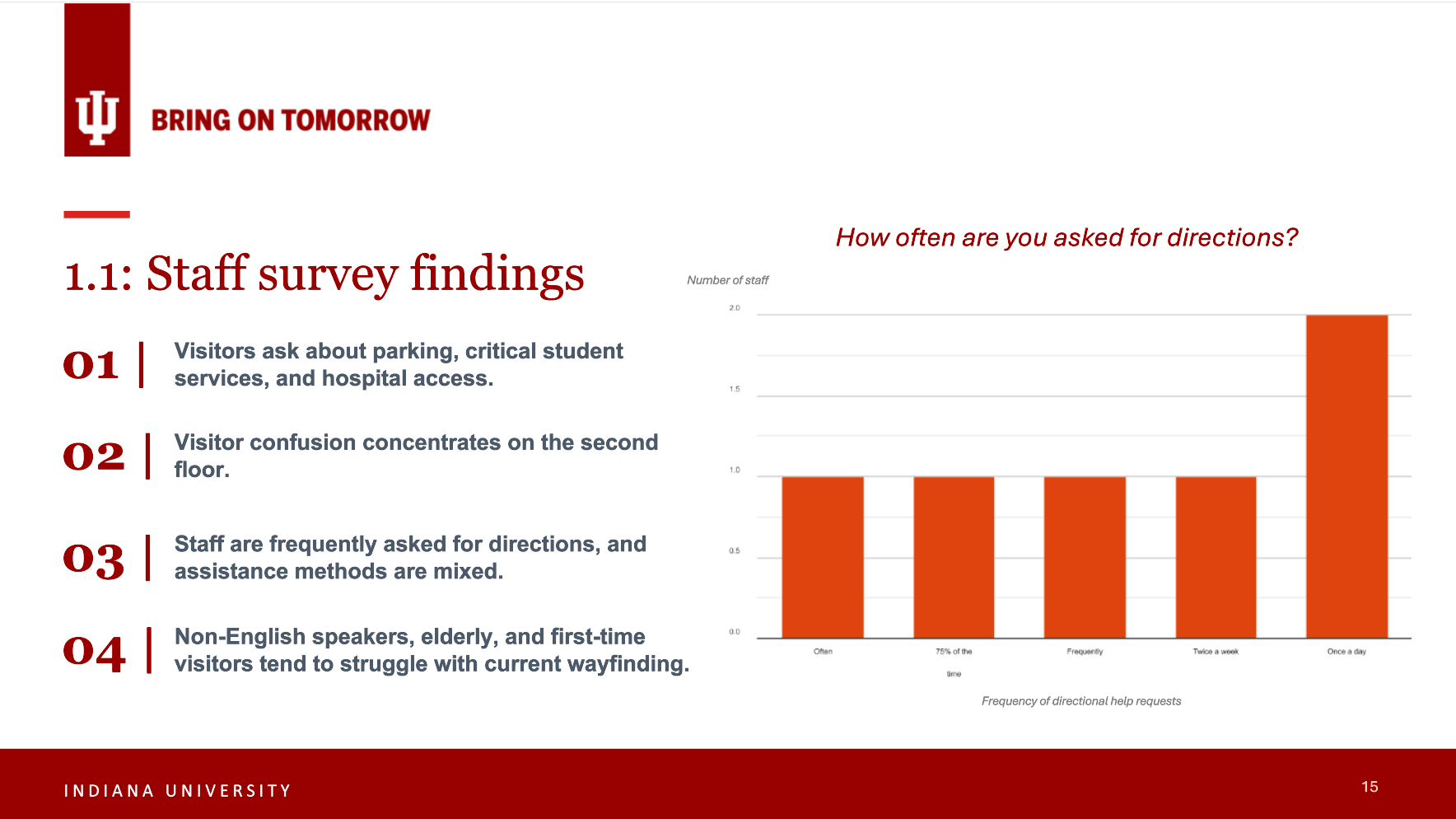
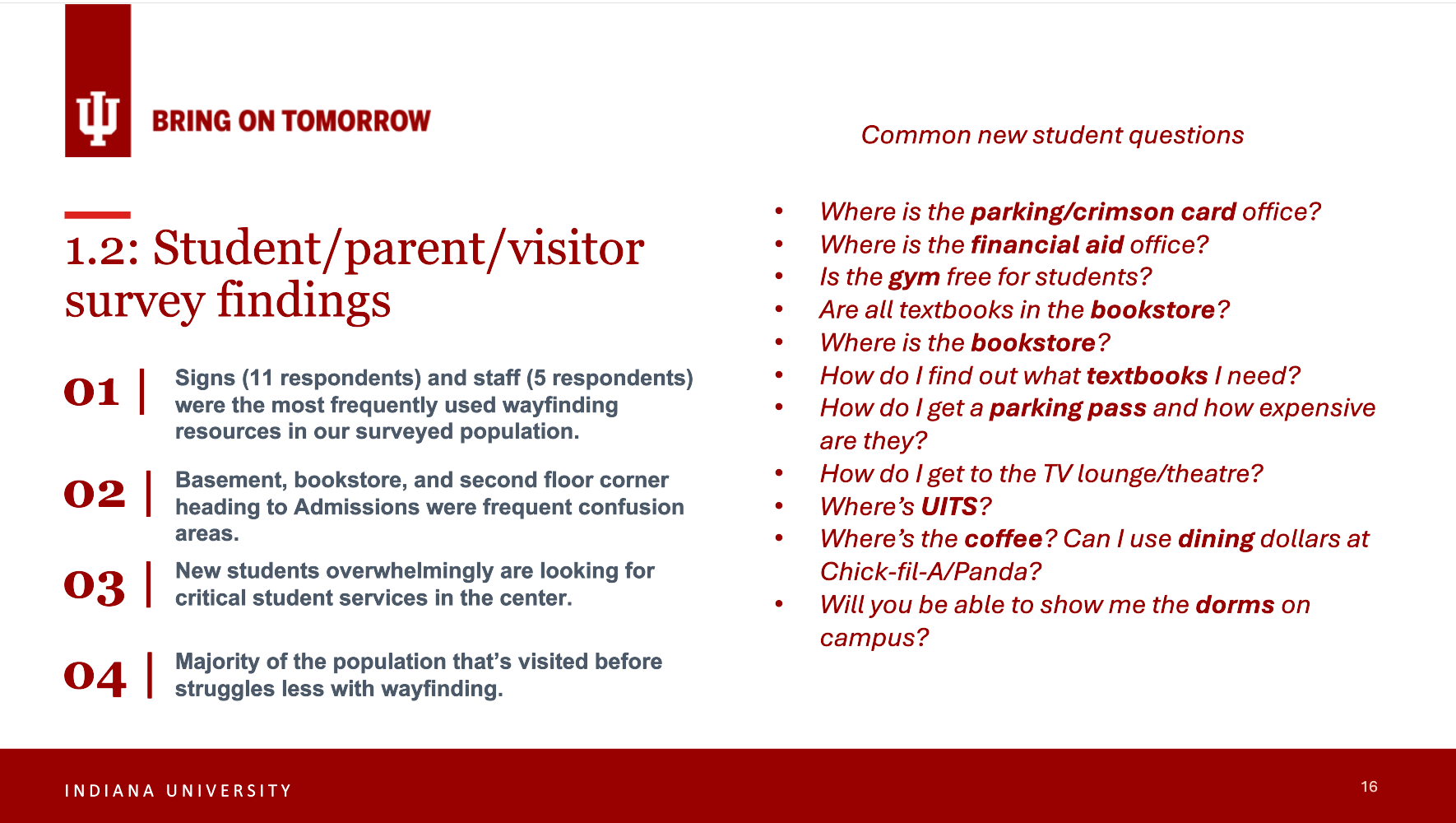
We conducted surveys with staff, students, and visitors to better understand where they experienced difficulties with wayfinding.
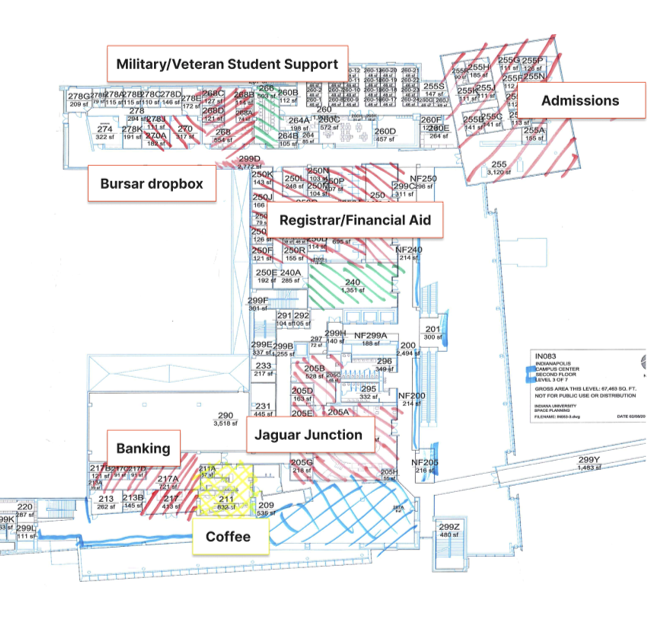
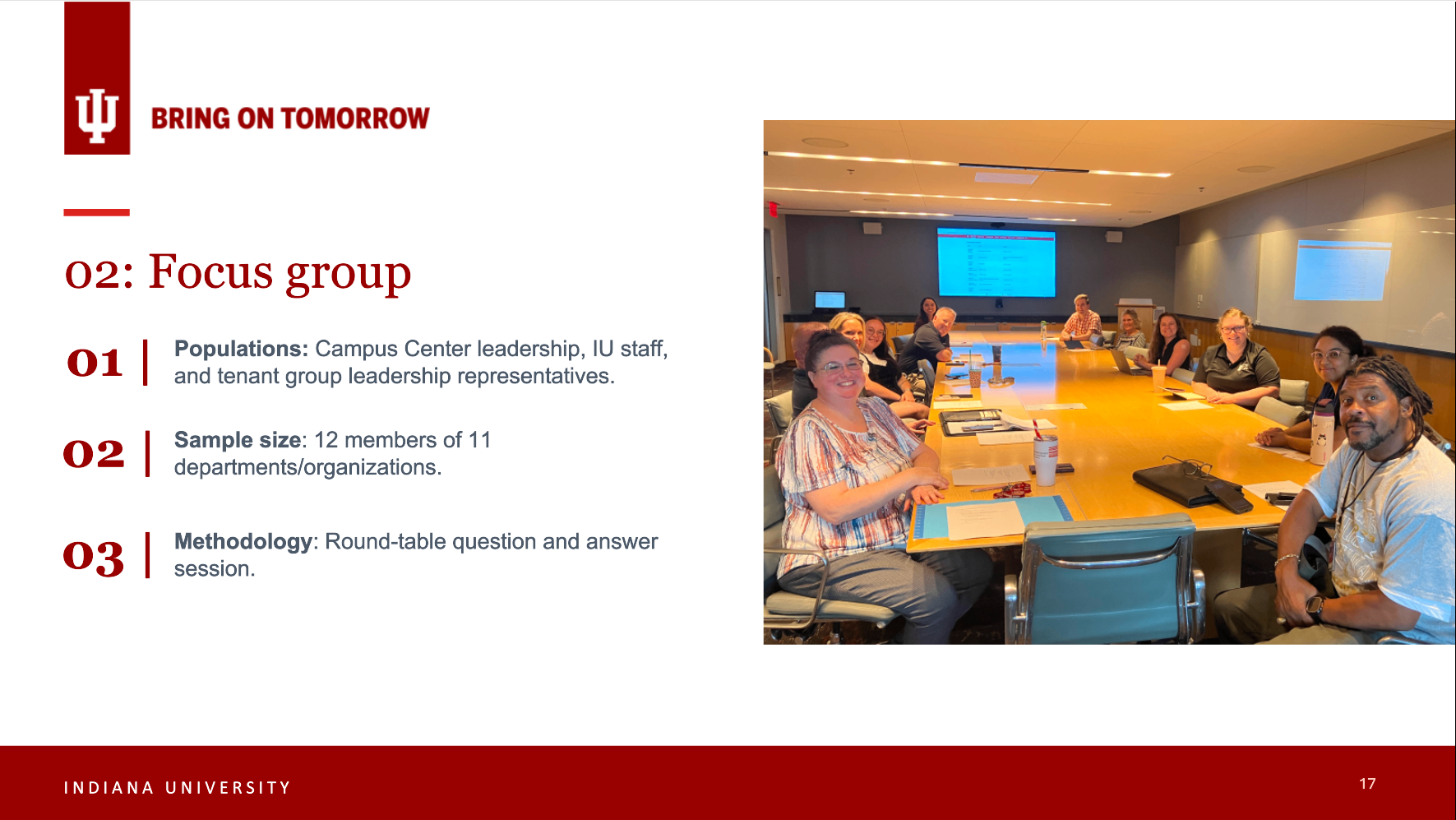
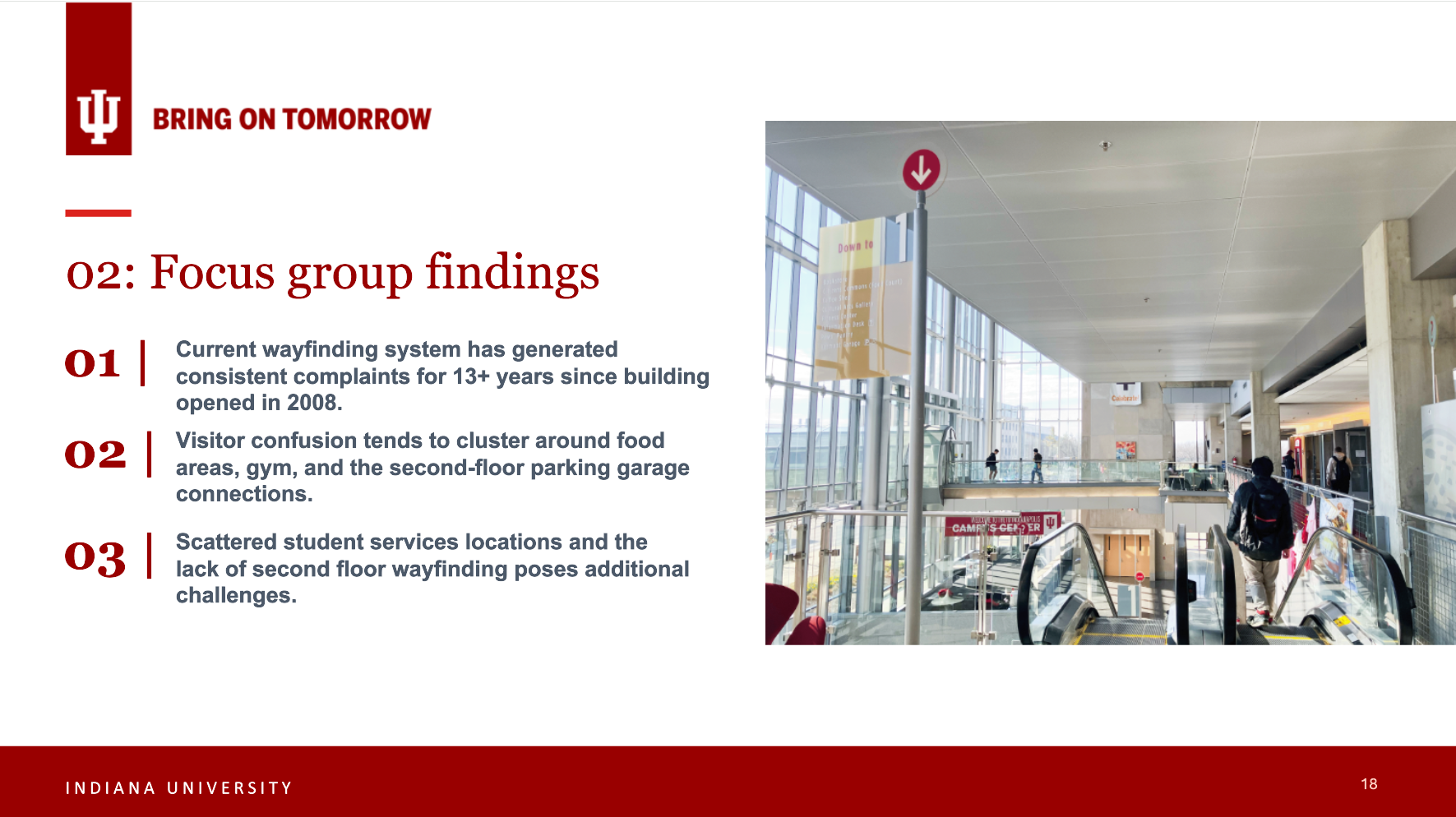
We held a focus group with Campus Center staff and tenants to better understand their goals for both the Campus Center and their individual businesses. During this session, we also identified areas where visitors frequently experience confusion, allowing us to pinpoint specific wayfinding challenges and opportunities for improvement.
Our Process
Research
We used a variety of research methods to explore wayfinding within the Campus Center.
Ecosystem Mapping
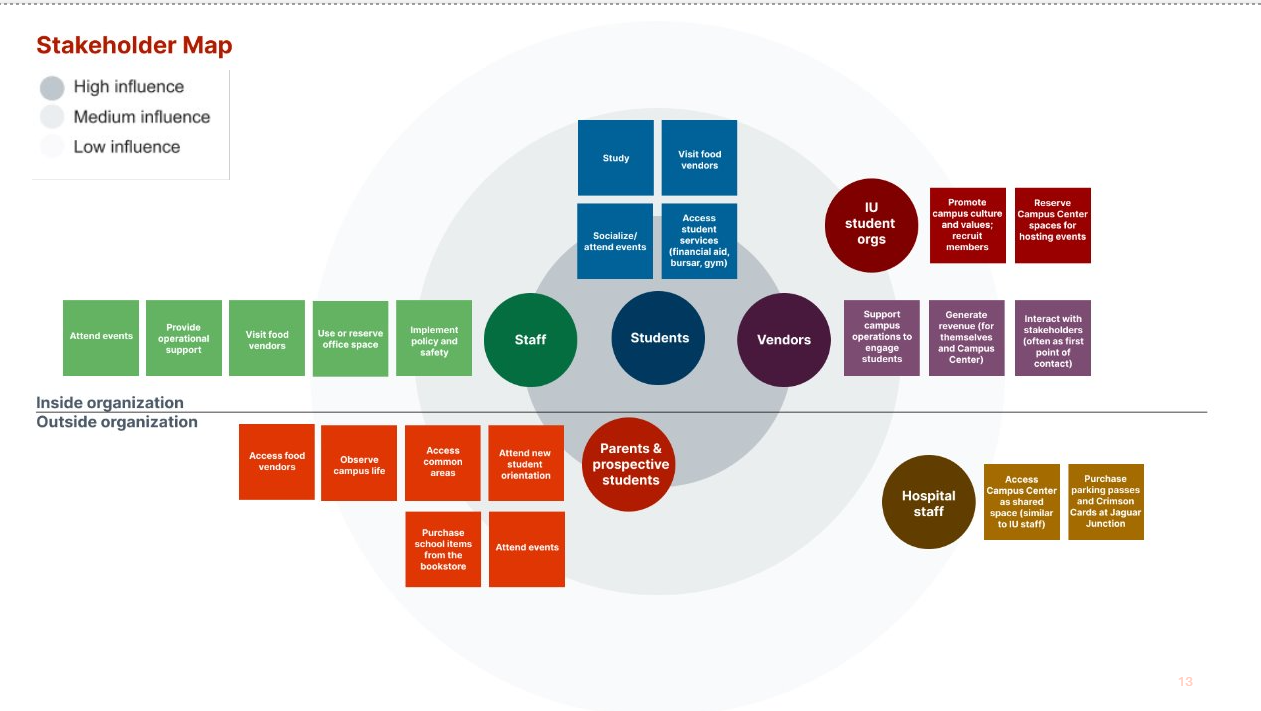
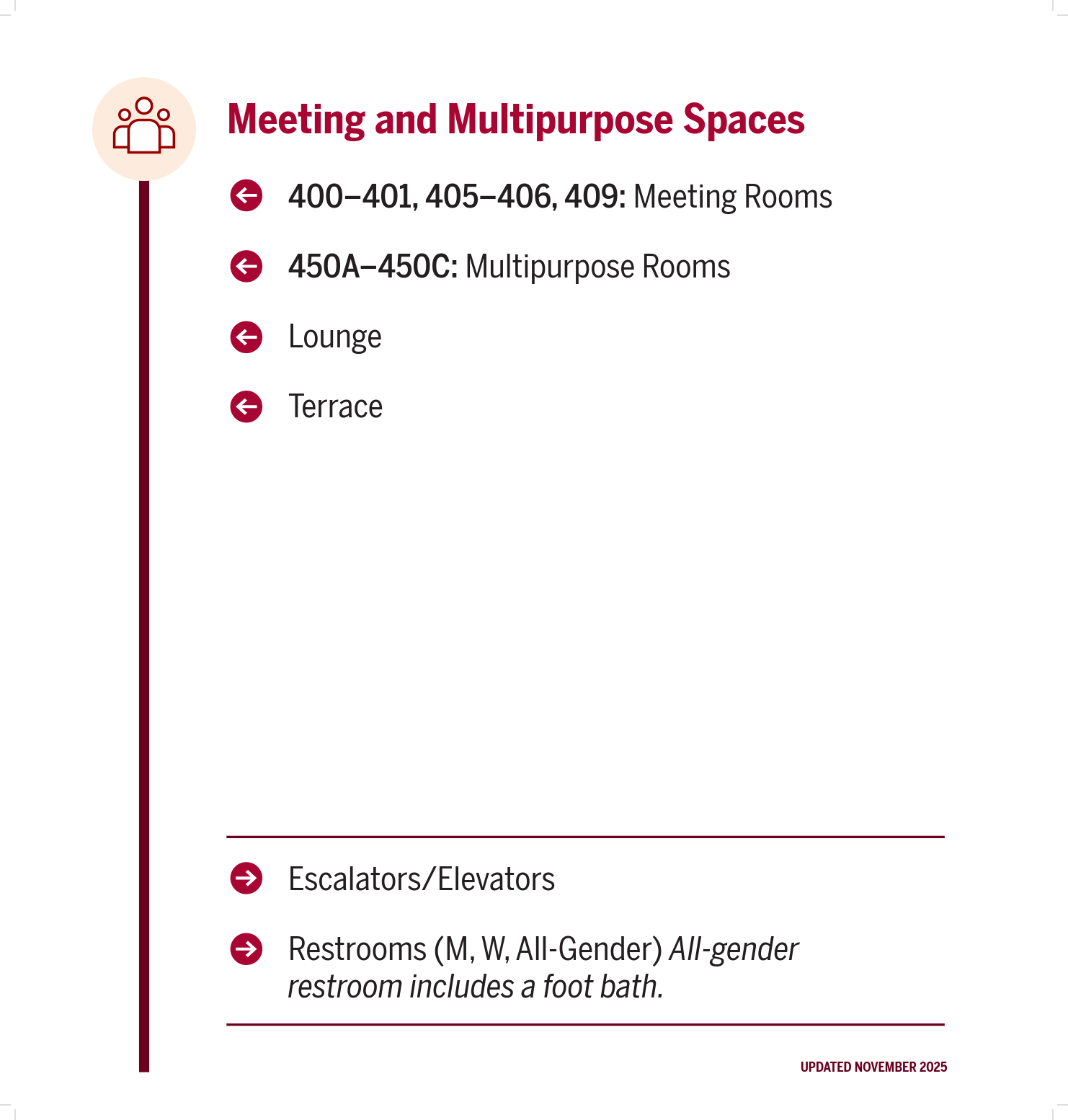
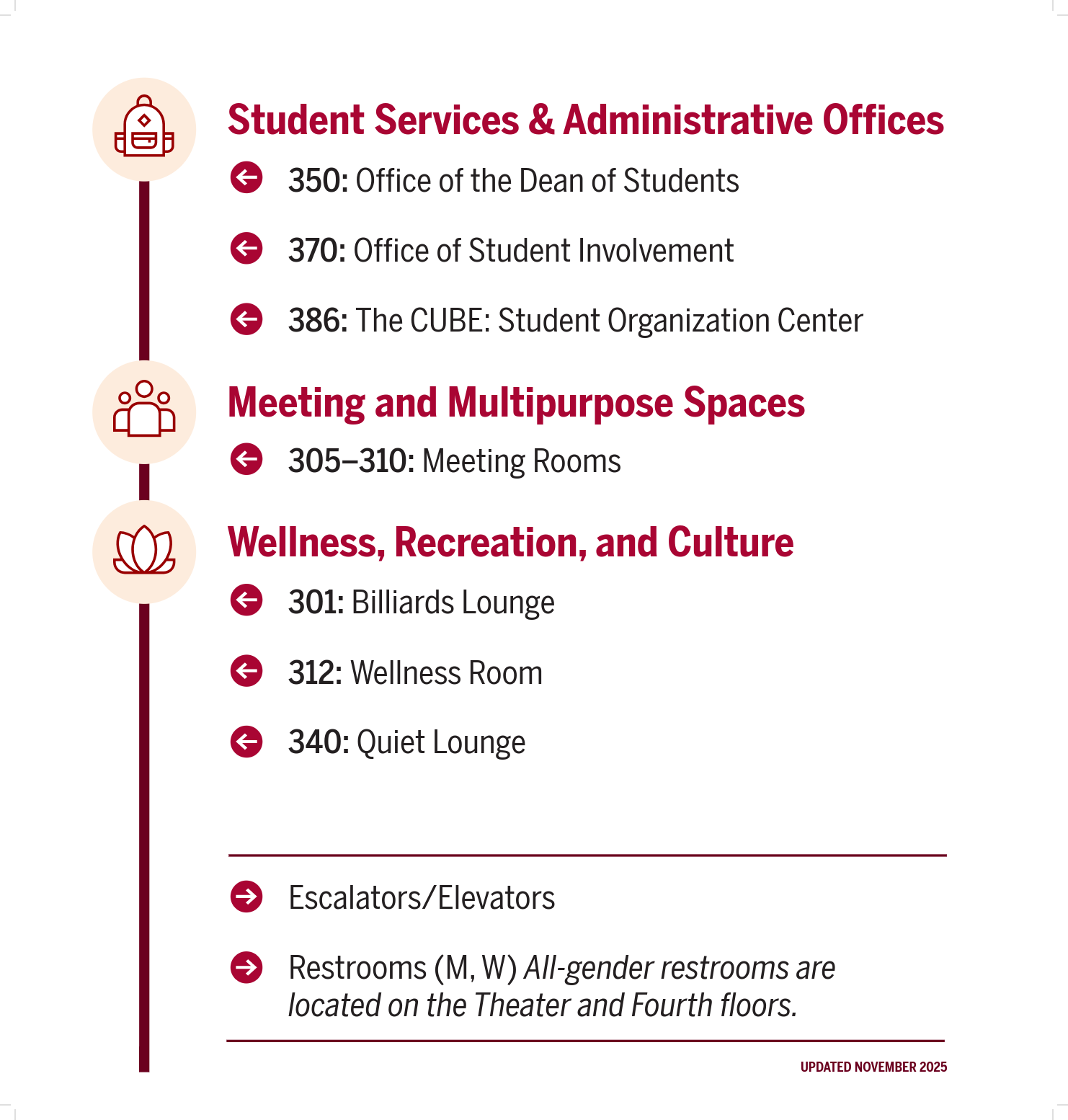
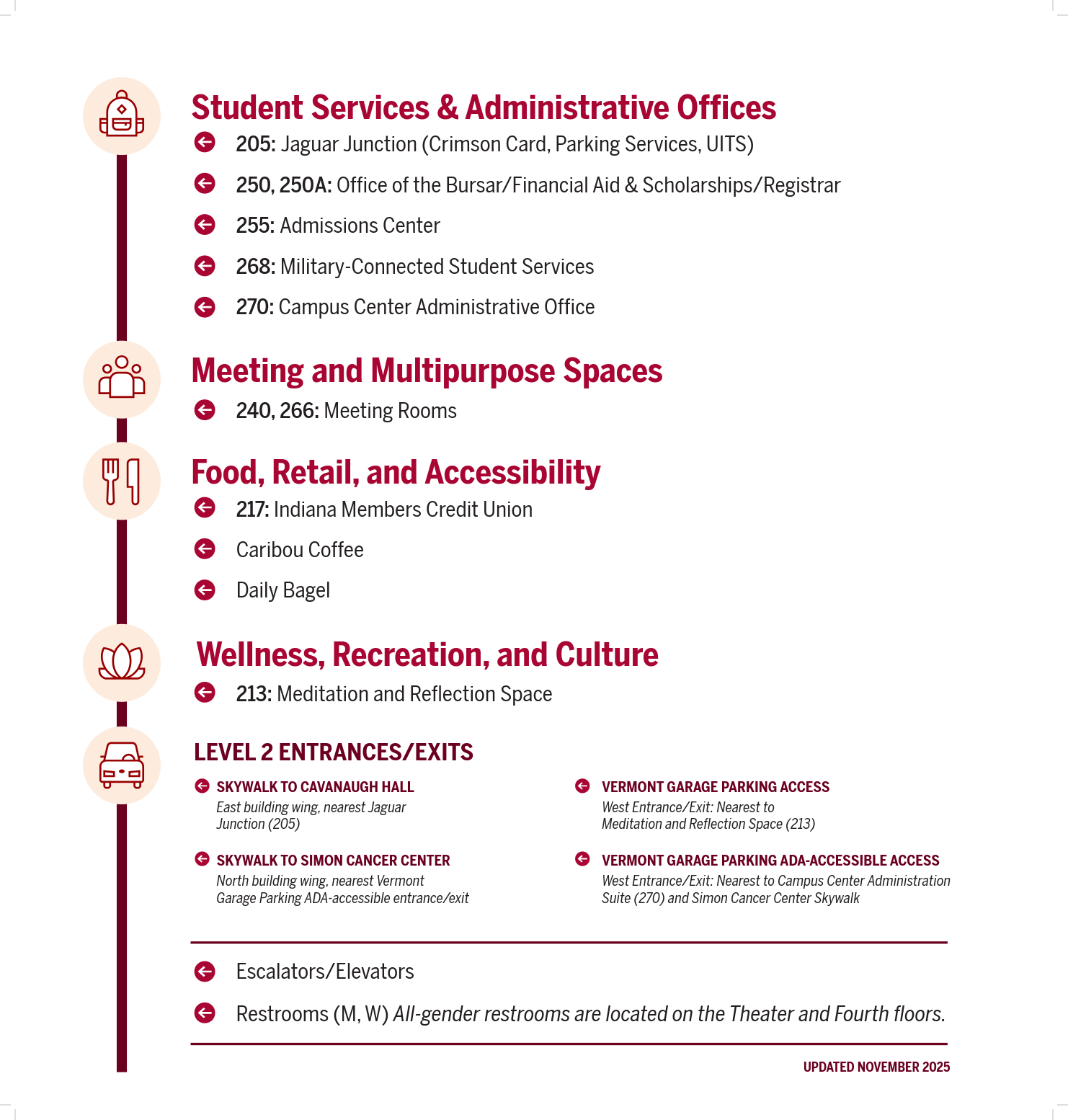
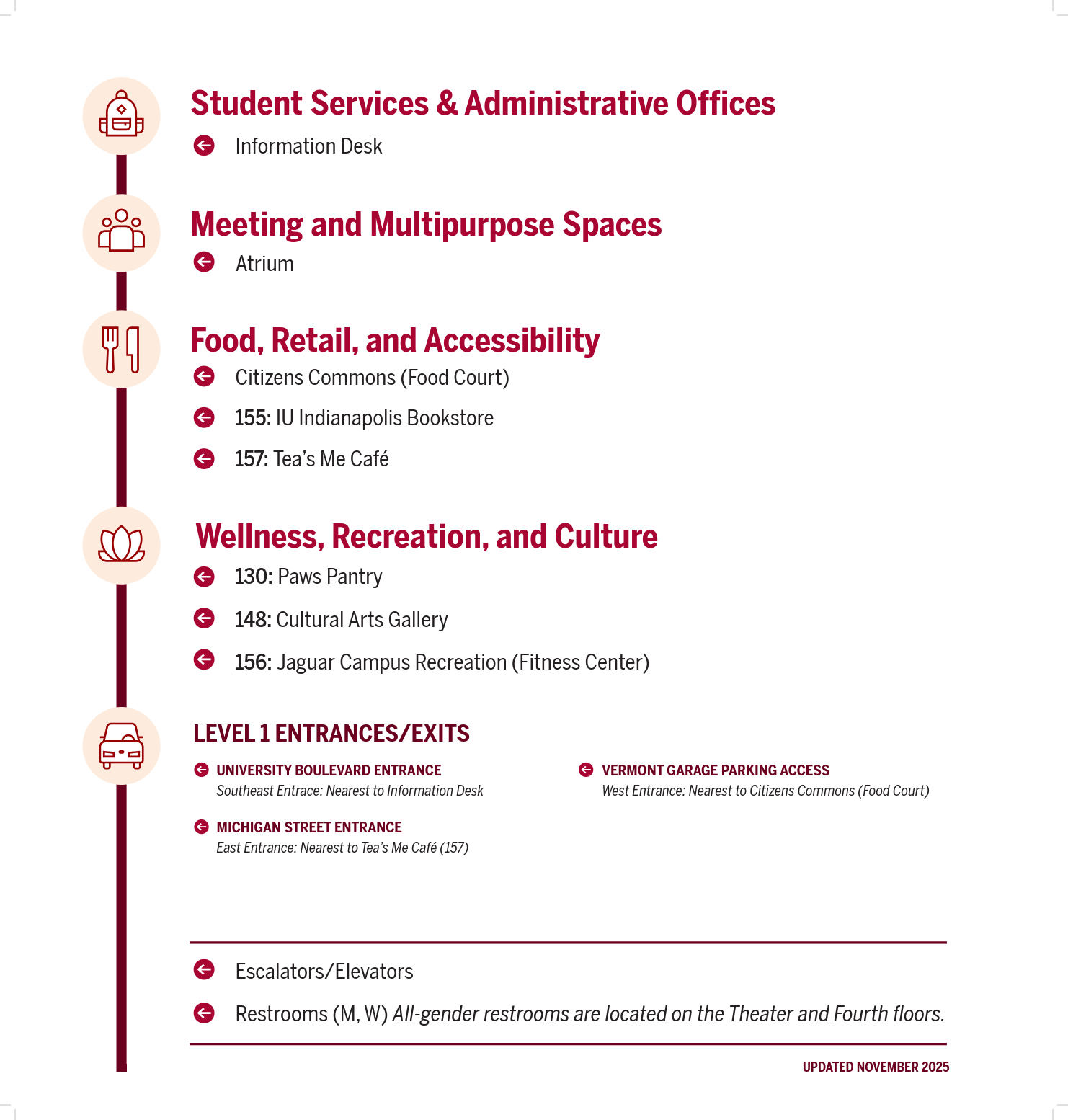
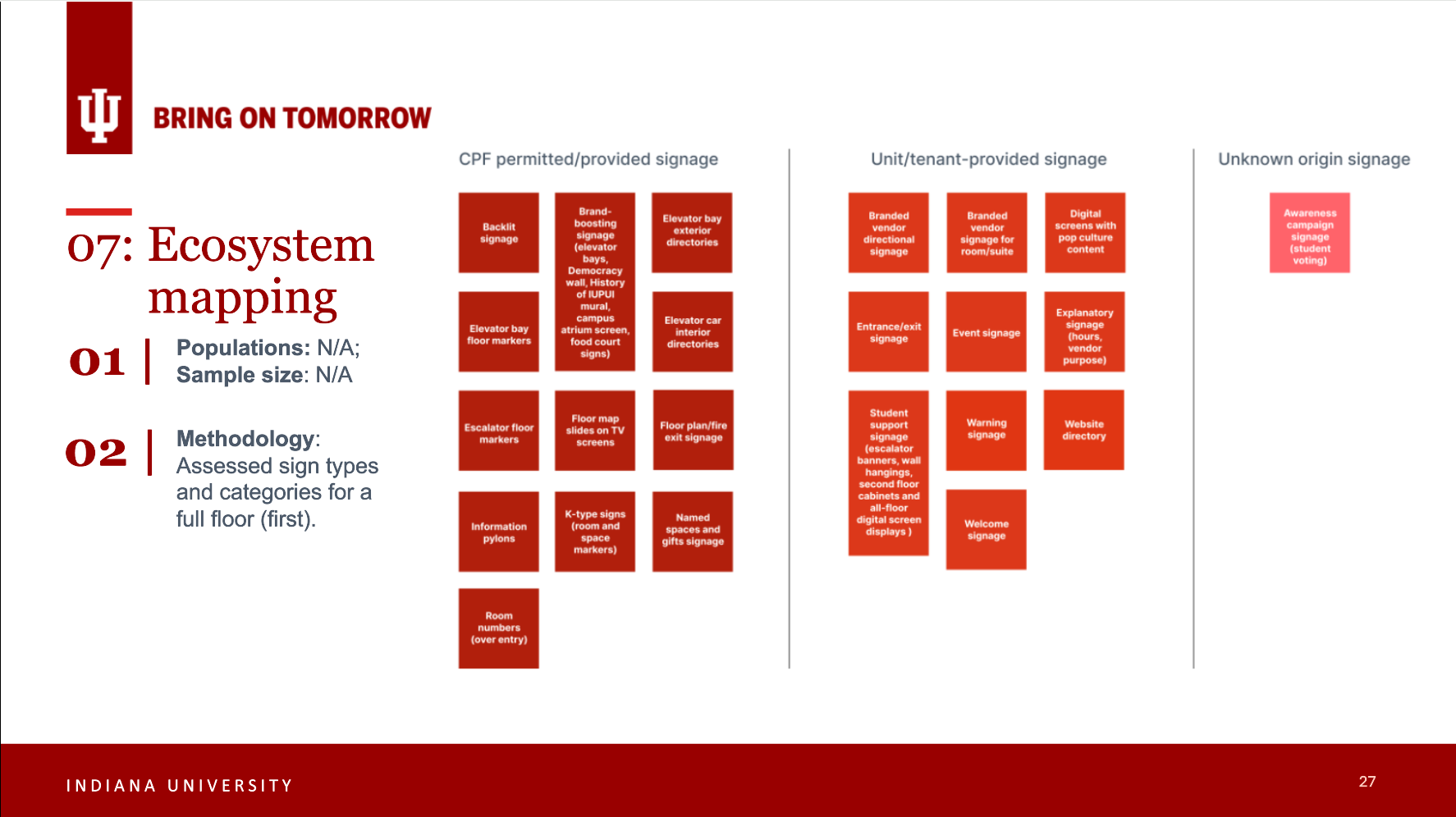
We conducted an ecosystem mapping of the current wayfinding methodology on the first floor, assessing all sign types and categories to understand their hierarchy, placement, and purpose. This allowed us to evaluate how effectively the system supports user navigation, identify redundancies, and uncover areas where signage was competing rather than functioning cohesively.
In addition, we developed a stakeholder map to understand the broader operational landscape behind the signage system. This helped clarify ownership, decision-making influence, maintenance responsibilities, and brand governance—revealing structural factors that impact consistency and long-term scalability of the wayfinding experience.
Insights and Recommendations
1. Leverage Landmarks as Navigational Anchors
Users naturally rely on memorable visual cues when navigating complex environments. For example:
“Jaguar Junction is right when you get off the escalators, next to the red ATM and around the corner from the lit ‘Welcome to IU Indianapolis’ sign.”
This behavior highlights an opportunity to intentionally design around existing landmarks. By reinforcing recognizable features (color, lighting, architectural moments, branded elements), the wayfinding system can align with how users actually orient themselves, reducing cognitive load and improving recall.
2. Eliminate Bottleneck Signage
Signage located at escalator landings directing visitors to upper and lower floors consistently caused hesitation and confusion. These high-traffic transition points created decision bottlenecks rather than clarity.
Recommendation: Remove or relocate this signage to more appropriate decision-making zones where users have physical space and contextual awareness to process information.
3. Unify IU Branding for Cohesive Wayfinding
Inconsistent visual styles across directional and landmark signage dilute clarity and brand recognition.
By unifying IU’s directional signage with high-profile landmark signage—through consistent typography, color hierarchy, iconography, and tone—the system can feel intentional and cohesive. This consistency strengthens brand presence while improving navigational confidence and ease of use.